Blog

  • Algeria Credit Card Options: Virtual & Online Payment Solutions

    Algeria Credit Card Options: Virtual & Online Payment Solutions

    In Algeria, you can pay online with bank-issued Mastercard/Visa debit, limited credit and charge cards, and secure virtual cards. Expect KYC with ID, proof of address, and income. Foreign purchases post in app-store currency with 1–4% FX fees; decline dynamic currency conversion. Use 3‑D Secure, spend limits, and alerts. Mobile wallets and local gateways support QR and wallet-to-bank transfers. Virtual cards suit trials and unfamiliar merchants. For subscription control and cross-border tips, the next sections clarify your best options.

    Overview of Algeria’s Online Payment Ecosystem

    Although cash still dominates day-to-day transactions in Algeria, the online payment ecosystem is expanding through a mix of domestic solutions and selective international rails.

    You’ll see growth driven by mobile wallets, government-backed digitization, and telecom-led payment apps that streamline utility bills, airtime, and e-commerce checkouts. Local gateways increasingly support wallet-to-bank transfers and QR acceptance, reducing friction for small merchants.

    You must navigate currency controls, KYC rules, and limited interoperability, which shape cross-border options and settlement times. International processors operate selectively, so you’ll often rely on hybrid setups that combine local acquirers with compliant foreign partners.

    While cryptocurrency payments remain constrained by regulation, you can track pilots exploring blockchain technology for remittances, identity verification, and transaction traceability.

    Focus on compliant integrations, robust fraud controls, and transparent fees to scale confidently.

    Debit, Credit, and Charge Cards: What’s the Difference?

    Why do card types matter in Algeria’s evolving payments market? They determine how you fund transactions, manage risk, and build credit history.

    A debit card draws from your bank balance, offering control and low fees—clear debit card advantages if you want to avoid debt and keep spending predictable.

    A credit card extends a revolving line you repay later. You gain purchase protection, potential rewards, and credit-building, but face credit card disadvantages: interest, late fees, and the risk of overspending. Approval often depends on income and creditworthiness.

    A charge card requires full repayment each cycle, typically with no preset spending limit but strict discipline.

    It can support larger, planned expenses while avoiding interest, yet missed payments trigger high penalties and possible account restrictions.

    A Practical Option for Instant Virtual Payments

    During our search for a fast and dependable way to manage online payments, we were introduced to vcc from Cardn3, and it stood out as a practical solution worth mentioning. From a third-party perspective, the platform appears well suited for users who need a virtual card or prepaid card for everyday online transactions, subscriptions, or international payments without relying on a traditional physical credit card. What makes this option appealing is the balance between speed and control—users can create a VCC quickly, use it for secure online payments, and limit exposure when shopping on unfamiliar websites. For freelancers, digital marketers, and anyone who prefers a modern virtual credit card approach, this type of virtual payment card can simplify spending while adding an extra layer of security compared to standard cards.

    Local Banks Offering Cards for Online and International Use

    As Algeria’s payments landscape modernizes, several domestic banks now issue cards you can use for e-commerce and abroad, albeit with varying features and limits.

    You’ll find local bank offerings that include international debit and prepaid cards linked to Mastercard or Visa, plus a few true credit cards subject to income and risk reviews. Limits often reflect foreign exchange controls, merchant category restrictions, and annual caps.

    To proceed, compare issuance networks, FX markups, ATM fees, and chargeback support. Verify 3‑D Secure enrollment for online purchases.

    During card application, you’ll typically submit ID, proof of address, income statements, and a foreign-currency allocation request if required. Ask about travel notices, dynamic currency conversion rules, and dispute timelines.

    If you prioritize e-commerce, confirm card activation for international online transactions before funding.

    Virtual Cards: How They Work and When to Use Them

    Beyond physical cards from local banks, virtual cards add a secure, flexible layer for online and cross‑border payments. You generate a digital card number, expiry, and CVV, then use it like a standard card at online merchants.

    Many issuers let you set spend limits, lock the card instantly, or create single‑use numbers. These controls reduce fraud exposure and help ensure secure transactions.

    You’ll value virtual card benefits when paying unfamiliar merchants, trial subscriptions, travel bookings, or marketplaces that store credentials. Use them to separate work and personal spending, cap budgets, and avoid sharing your primary card.

    They’re issued quickly, often through apps, and can be disabled without affecting your main account. For recurring payments, create a dedicated virtual card with defined limits and monitoring.

    Prepaid and Reloadable Card Options in Algeria

    A range of prepaid and reloadable cards in Algeria lets you control spending without opening a full credit line. You load funds in advance, limit exposure to fraud, and avoid interest. Banks and licensed issuers provide Prepaid options linked to international networks for e-commerce, subscriptions, and travel. You can set limits, track balances, and lock cards instantly.

    Reloadable features let you top up at branches, ATMs, or online banking, often with instant crediting. Some cards support foreign-currency wallets and dynamic currency conversion; review FX margins before use.

    Fees vary by issuer: expect issuance, monthly maintenance, ATM withdrawal, and inactivity charges. KYC rules typically require ID and residency.

    Choose cards with transparent pricing, real-time alerts, and dispute support to keep payments predictable and secure.

    Mobile Wallets and QR-Based Payments

    Prepaid control extends naturally to mobile wallets and QR-based payments, which digitize everyday spending without a full credit line. You load funds, tap or scan, and track transactions in real time.

    Mobile wallet benefits include faster checkout, budgeting visibility, and reduced card exposure, since tokens replace card numbers at the point of sale.

    In Algeria, banks and fintech apps increasingly support QR codes for retail, utilities, and peer transfers. You authenticate with PIN, biometrics, or device security, while dynamic codes strengthen QR payment security against replay attacks.

    Offline-ready QR flows maintain reliability during network gaps. You can cap spending per transaction, set alerts, and freeze the wallet instantly if your phone’s lost.

    Interoperable schemes help you pay small merchants, transit, and service providers efficiently.

    Linking Cards to International Platforms and App Stores

    When linking your Algerian card to international platforms and app stores, you must check eligibility and set the correct region in your account settings.

    You should confirm which card networks and mobile wallets are supported for authentication and recurring billing.

    You’ll also need to review currency conversion rules, fees, and platform-imposed limits to avoid failed payments or unexpected costs.

    Eligibility and Region Settings

    Though eligibility can vary by issuer, you generally need a card enabled for international transactions and a billing address that matches the region settings of the platform or app store you’re using.

    Verify card eligibility with your bank, including whether foreign merchant category codes and 3D Secure are supported. Ensure your billing name, address, and phone match your account profile exactly.

    Check region restrictions before linking. Many platforms require your account country, payment method country, and IP location to align.

    If you maintain an Algeria account, set DZD or an accepted currency and provide a valid local address; for foreign storefronts, use a legitimate address in that country.

    Avoid frequent country switches, which can lock purchases or credits. Keep proof of identity handy for re-verification after region updates.

    Supported Cards and Wallets

    With your region and eligibility set, focus on which Algerian cards and wallets actually work on global platforms and app stores. You’ll get the broadest acceptance with Visa and Mastercard, including virtual cards issued by reputable local or regional providers.

    Most platforms let you add these cards directly to your account, then verify via 3‑D Secure or SMS OTP for payment security.

    You can also link digital wallets that support international purchases. Where available, connect wallets like PayPal, Apple Pay, or Google Pay after adding a compatible Visa or Mastercard.

    Confirm the wallet’s country settings match your app store region, then complete any identity checks.

    Avoid local-only networks that lack international rails. Test small purchases to confirm billing address formats, 3‑D Secure compatibility, and successful authorization.

    Currency, Fees, and Limits

    Despite straightforward linking, you’ll pay in the app store’s billing currency, not Algerian dinars, so your issuer converts the charge at its card-network rate and adds any foreign transaction fee.

    Expect currency conversion spreads plus international fees of 1–4%, depending on network and issuer. Check whether your card offers fee waivers; many local cards don’t.

    You’ll face platform-level limits, issuer authorization thresholds, and any national foreign-exchange caps. Small test charges and preauthorizations can temporarily reduce available balance.

    If you use virtual cards, confirm per-transaction and daily limits before high-value purchases.

    To control costs, set store country carefully, avoid dynamic currency conversion, and monitor exchange-rate timing.

    Enable spend alerts, keep a buffer for refunds posted at different rates, and maintain a secondary funding method for declines.

    Foreign Currency, FX Fees, and Spending Limits

    If you plan to spend abroad or shop online in non-dinar currencies, understand how Algerian cards handle foreign transactions, fees, and limits. You’ll face currency conversion via card-network rates plus a bank markup. Foreign exchange spreads vary by issuer and card tier; premium products may cut margins.

    Expect additional FX fees per transaction, typically a percentage, and sometimes a flat cross-border charge. Check your card’s monthly foreign allocation and per-transaction limits. Some cards cap overseas e-commerce and ATM cash withdrawals separately.

    Track dynamic currency conversion prompts; decline DCC to avoid worse rates. Verify pre-authorization holds for hotels and car rentals, which can reduce available limits temporarily. Monitor real-time notifications to manage transaction limits and prevent declines.

    Use multi-currency wallets when allowed to minimize repeated conversions.

    Identity Verification, KYC, and Card Eligibility

    You’ll need a valid Algerian national ID and supporting documents to satisfy banks’ KYC standards.

    Prepare a checklist that typically includes proof of identity, proof of address, income or employment evidence, and recent photos or signatures.

    You should also assess eligibility factors such as age, residency status, credit history, and minimum income thresholds.

    National ID Requirements

    While Algeria’s banks compete on features and fees, they follow strict identity verification rules that hinge on your National Identity Card (Carte Nationale d’Identité) or a valid passport for non-citizens.

    You’ll need a current, machine‑readable document that matches your legal name and birth details. Banks assess eligibility by confirming identity, age, and residency status before issuing physical or virtual cards.

    You should present acceptable national id types based on your status: Algerian citizens use the CNI; foreign residents typically use a passport plus residence permit.

    The verification process tests authenticity with database checks, photo matching, and signature or biometric comparisons. If data conflicts appear, the bank pauses issuance until you rectify records.

    Minors usually require a legal guardian’s consent. Expired documents cause immediate rejection.

    KYC Document Checklist

    Because banks must verify identity, age, and residency before issuing cards, assemble a complete KYC packet that matches your legal records.

    Follow KYC regulations and meet each bank’s document requirements precisely to avoid delays.

    Submit:

    • a valid Algerian National ID or passport;
    • a recent passport-style photo;
    • proof of residency (utility bill, lease, or domicile certificate dated within 3 months);
    • proof of income or activity (salary slip, employment certificate, tax notice, or business registration for self-employed);
    • and your bank application form signed consistently with your ID.

    Include your NIF if requested.

    Provide high-quality scans for online onboarding: color, full edges visible, no glare.

    Ensure names, dates, and addresses match across documents. If your name changed, attach supporting civil status records.

    For minors, include guardian documents and legal consent.

    Keep copies ready for re-verification.

    Eligibility Criteria Factors

    Although banks differ by product, they assess three pillars before approving an Algerian credit card: identity verification, full KYC compliance, and product-specific eligibility.

    You must confirm your legal identity with a valid passport or national ID, match details to civil records, and pass sanctions and PEP screening. For KYC, you’ll provide address proof, phone validation, and source-of-funds declarations to meet AML rules.

    Product eligibility focuses on repayment capacity and risk. Banks conduct income verification—salary slips, tax attestations, or employer letters—and evaluate employment stability and debt-to-income ratios.

    They’ll review your banking history and, where available, your credit score or internal risk score. Minimum age thresholds and residency status apply. Some issuers require collateral or set lower limits for first-time borrowers or virtual-only cards.

    Security Features, 3‑D Secure, and Fraud Prevention

    Even as Algerian issuers expand card access, robust security features remain central to protecting your transactions. You should favor cards and virtual numbers that enforce strong security protocols, including tokenization, EMV chip authentication, and biometric verification in mobile wallets.

    Enable instant alerts, set spending limits, and lock cards in-app to reduce exposure.

    3‑D Secure (often branded as Visa Secure or Mastercard Identity Check) adds an extra authentication layer at checkout. You’ll confirm identity via one‑time passwords, push approvals, or biometrics, lowering chargeback risk and deterring credential‑stuffing.

    Effective fraud prevention relies on continuous transaction monitoring. Your bank’s systems flag anomalies—unusual geolocation, merchant category shifts, rapid retries—and may require step‑up verification.

    Report disputed charges promptly, keep devices updated, avoid public Wi‑Fi, and use unique, complex passwords to maintain account integrity.

    Managing Subscriptions and Recurring Payments

    When you rely on credit cards for streaming, cloud storage, or utility autopay, manage recurring charges proactively to avoid surprises and fees.

    Centralize subscription management in your banking app or a dedicated dashboard, and label each merchant with billing cycle dates and renewal terms. Enable payment automation only for services you intend to keep, and set spending caps or alerts for unusual increases.

    Review statements monthly to spot price changes, duplicate trials, or dormant services. Cancel directly with the merchant, then remove the mandate from your card to prevent retries.

    For virtual cards, assign unique numbers per service to isolate risk and simplify revocation. Keep an emergency buffer to cover failed retries, and update card details promptly after expirations, replacements, or limit adjustments.

    Tips for Travelers and Cross-Border Shoppers

    When paying abroad, you’ll weigh currency conversion options to minimize fees and rate markups.

    You’ll compare dynamic currency conversion with issuer exchange rates and choose the lower-cost path.

    You’ll also apply strict fraud practices: enable travel notices, use cards with strong authentication, monitor alerts, and avoid insecure payment terminals.

    Currency Conversion Strategies

    Although Algeria remains a largely cash-oriented market, smart currency conversion strategies help you cut costs and avoid surprises on card transactions.

    Always pay in the local currency when a merchant offers dynamic currency conversion; the card network’s rate is typically better. Before you travel, compare your card’s foreign transaction fees, ATM fees, and network exchange rates to select the most economical option.

    Monitor currency exchange trends and market fluctuations; time larger purchases or cash withdrawals when rates move in your favor. Use reputable rate trackers and set alerts.

    When withdrawing cash, choose larger, less frequent withdrawals from bank-affiliated ATMs to reduce cumulative fees. If you shop online cross-border, check the merchant’s billing currency, total landed cost, and your bank’s rate at checkout.

    Keep receipts and reconcile statements promptly.

    Fraud and Security Tips

    Someone determined can exploit small lapses, so treat every card transaction in Algeria and cross-border as a security event. Use cards that support real-time fraud detection, dynamic CVV, and biometric authentication.

    Prefer secure transactions through reputable gateways; avoid unfamiliar links, public Wi‑Fi, and unverified POS terminals. Set low spending limits on travel cards, enable instant alerts, and freeze cards when not in use.

    1. Update device OS, browser, and banking apps; disable sideloading. Use a VPN only if your bank permits it.
    2. Verify merchants: check HTTPS, business registration, and refund policies; test with a small purchase first.
    3. At ATMs, inspect for skimmers; cover the keypad; use bank-branch machines.
    4. Keep redundant payment methods, photocopies of cards, and issuer contacts; report anomalies immediately.

    Budgeting Tools and Best Practices for Safe Online Payments

    Even if you’re focused on rewards or credit limits, prioritize budgeting and security to keep online spending under control.

    Use budgeting apps to set category caps, enable real-time alerts, and track merchant-level spending. Automate bill payments for predictability, but review statements weekly to spot anomalies.

    Create separate virtual cards for subscriptions and one-time purchases to contain risk and simplify audits.

    For safe transactions, enable two-factor authentication, use strong unique passwords, and avoid public Wi‑Fi without a VPN.

    Activate transaction notifications, location controls, and spending limits in your card or wallet app. Prefer trusted gateways and confirm HTTPS before entering details.

    Reconcile receipts with bank records, and dispute irregular charges immediately.

    Finally, schedule monthly reviews to adjust limits, cancel unused services, and refine your budget.

    Conclusion

    You’ve now met Algeria’s card circus: debit that behaves, credit that flatters, charge that scolds. You’ll flirt with virtual numbers, reload prepaid hope, and salute 3‑D Secure like a border guard. You’ll babysit subscriptions, shop across frontiers, and pretend budgeting apps cure impulse. Do verify limits, fees, and merchant support before you click “Buy,” because nothing says financial sophistication like avoiding a declined payment—and nothing says satire like learning it the expensive way.

  • Energy-Efficient Garage Door Replacement: What You Need to Know in 2026

    Energy-Efficient Garage Door Replacement: What You Need to Know in 2026

    If you’re thinking about a garage door replacement in 2025, you’re making a smart move especially as energy-efficient upgrades continue to play a huge role in improving home comfort, reducing energy bills, and boosting curb appeal. At All American Overhead Garage Door, we’ve seen a major shift in what homeowners and business owners expect when it comes to new garage door installations, and energy-efficient designs are leading the way.

    Whether you’re dealing with a broken garage door, thinking about replacing an old model, or simply exploring ways to enhance your home’s value, let’s walk through everything you need to know about choosing the right energy-efficient option this year.

    ⭐ Why Energy Efficiency Matters in Modern Garage Door Replacement

    In 2025, garage doors are no longer just big moving panels they are part of your home’s insulation system. An energy-efficient garage door can help regulate indoor temperatures, protect stored belongings, and reduce wear on your HVAC system. This is especially important if your garage is attached to your home or used as a workspace.

    Modern energy-efficient doors offer:

    • High-performance insulation (ideal for hot and cold climates)
    • Better noise reduction
    • Improved durability
    • Lower long-term energy costs

    If you’re planning a residential garage door replacement or need a more insulated solution for a commercial space, upgrading to an energy-efficient model is a smart investment.

    🔍 What’s New in 2025 for Energy-Efficient Garage Doors?

    Garage door technology has come a long way, and 2025 models are packed with features designed to improve comfort, security, and performance. Here’s what’s trending:

    1. Enhanced Insulation Options

    Insulated garage door replacement options now come in steel, wood, composite, and custom finishes. Many homeowners choose steel garage door replacements because they deliver superior insulation and require minimal maintenance. For a warmer, natural look, wood garage door replacements remain a favorite with added insulation layers for efficiency.

    2. Smart Garage Door Systems

    Energy-efficient doors now pair seamlessly with smart garage door systems, allowing you to monitor your garage, receive alerts, and open or close your door remotely. These systems improve both convenience and security.

    3. Automatic Garage Door Installation Upgrades

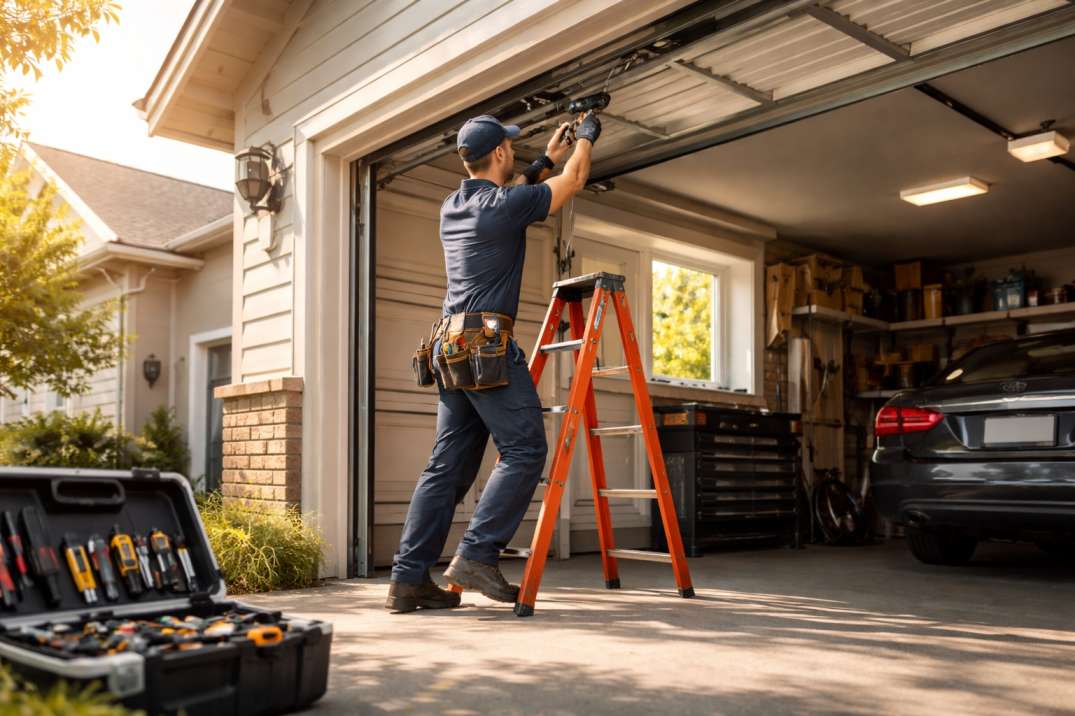
    Motor efficiency has also improved. Many customers choose garage door opener replacement and installation at the same time as their door upgrade to ensure the system operates smoothly and quietly.

    4. Custom Garage Doors for Unique Homes

    Homeowners can now fully customize their door’s design, materials, insulation type, and window layout. This helps create a garage door that matches your home’s style while boosting its efficiency.

    💰 Costs: What to Expect for Garage Door Replacement in 2026

    When it comes to the cost of garage door replacement, several factors play a role:

    • Materials (steel, wood, aluminum, composite)
    • Insulation level (single, double, or triple layer)
    • Design customization
    • Smart technology add-ons
    • Labor from your garage door contractor

    At All American Overhead Garage Door, we offer affordable garage door replacement options without sacrificing quality. Whether you’re looking for a premium upgrade or something budget-friendly, our team ensures you get the ideal solution for your home.

    And yes if you need quick help, we provide same-day garage door replacement, emergency garage door replacement, and fast service for issues like:

    • Garage door won’t open replacement
    • Garage door off-track repair/replacement
    • Damaged garage door panel replacement
    • Broken garage door replacement

    🏡 Residential vs. Commercial Garage Door Replacement

    Residential Garage Door Replacement

    Most homeowners choose energy-efficient steel or composite models because they:

    • Improve home comfort
    • Reduce noise
    • Offer strong durability
    • Increase home value

    Pairing this with garage door installation, garage door repair, and ongoing garage door service ensures long-lasting performance.

    Commercial Garage Door Replacement

    Commercial properties require stronger insulation and durability. Whether you’re upgrading to a modern roll-up door or replacing a damaged industrial panel, choosing energy-efficient materials helps reduce operating costs and protect interior equipment.

    🛠️ Why Choose All American Overhead Garage Door?

    When you’re searching for garage door replacement professionals near me or the best garage door replacement services near me, you want a team that understands modern efficiency standards, safety requirements, and proper installation techniques. That’s exactly what we deliver.

    Here’s what sets us apart:

    • Experienced local garage door installers
    • Full-service support from garage door upgrade to maintenance
    • Licensed, insured garage door company
    • Honest pricing with no hidden fees
    • High-quality materials built to last
    • Customizable options for both residential & commercial projects

    We handle everything from garage door replacement and installation to complex repairs, ensuring your new energy-efficient garage door performs at its best.

    🚀 Ready to Replace Your Old Garage Door with a Modern, Energy-Efficient One?

    If you’re planning to replace your old garage door with a modern one, now is the perfect time. Energy-efficient models are more advanced than ever, and the long-term savings make them worth every penny.

  • How Long Does a Car Key Locksmith Take? Time, Cost & What to Expect

    How Long Does a Car Key Locksmith Take? Time, Cost & What to Expect

    When you’re stuck without your car keys, whether they’re lost, broken, or locked inside your vehicle, the first question that usually comes to mind is: how long will a car key locksmith take? The second is often about cost. At Express Locksmith & Car Keys, we hear these questions every day, and the good news is that most automotive locksmith services are much faster, easier, and more affordable than people expect.

    In this guide, we’ll walk you through realistic timeframes, pricing factors, and exactly what to expect when you call a car key locksmith, so you can feel confident and prepared when you need help most.

    Average Time: How Long Does a Car Key Locksmith Take?

    The time required depends on the type of service you need and the technology in your vehicle. In most cases, a mobile car locksmith can complete the job on the spot, without towing your car or sending you to a dealership.

    Here’s a general breakdown:

    🔑 Car Lockout Services

    If you’ve locked keys in the car, an experienced vehicle locksmith can usually:

    • Unlock your car door in 5–15 minutes
    • Perform a safe, damage-free emergency vehicle unlock
    • Get you back on the road almost immediately

    This is one of the fastest services we offer and a common reason customers call a 24/7 car locksmith.

    🚗 Car Key Replacement (Lost or Broken)

    For lost car key replacement or broken car key repair, timing varies based on the key type:

    • Traditional metal keys: 15–30 minutes
    • Transponder key programming: 30–60 minutes
    • Smart key replacement / push-to-start keys: 45–90 minutes

    Most same day car key replacement jobs are completed in under an hour, even for modern vehicles.

    🔐 Key Fob & Smart Key Programming

    If you need:

    • Key fob replacement
    • Key fob programming
    • Remote car key replacement
    • Chip key programming

    Expect the process to take 30–60 minutes, depending on your vehicle’s make, model, and security system.

    What Affects the Time?

    Several factors can influence how quickly an auto key locksmith can complete your service:

    • 🚘 Vehicle make & model (luxury and newer cars take longer)
    • 🔐 Key technology (standard, transponder, or smart key)
    • 📍 Your location and accessibility
    • 🚨 Whether it’s an auto locksmith emergency service
    • 🧰 Availability of OEM-compatible key blanks

    At Express Locksmith & Car Keys, our fully equipped vans allow us to handle nearly all automotive locksmith jobs on-site.

    Cost: How Much Does a Car Key Locksmith Cost?

    While prices vary, a car locksmith is typically far more affordable than a dealership. Here’s what usually impacts cost:

    💰 Key Cost Factors

    • Type of key (standard vs. electronic)
    • Programming requirements
    • Emergency or after-hours service
    • Vehicle brand and year

    💡 Typical Price Ranges

    • Car lockout service: Affordable and often the lowest-cost option
    • Duplicate car keys / spare car key: Budget-friendly and fast
    • Smart key or transponder key replacement: Higher cost due to programming

    If you’re searching for a cheap car key locksmith or affordable car key replacement, calling a trusted automotive locksmith near me is usually the best choice.

    What to Expect When You Call Express Locksmith & Car Keys

    We believe transparency makes stressful situations easier. Here’s how our process works:

    1. 📞 You call for a car key locksmith near me
    2. 🚐 A mobile car locksmith is dispatched to your location
    3. 🔍 We assess the issue and confirm pricing upfront
    4. 🛠️ We complete the service on-site
    5. ✅ You test your new or repaired key before we leave

    No towing. No dealership delays. No surprises.

    Why Choose a Professional Automotive Locksmith?

    Working with a professional automotive locksmith ensures:

    • Safe, damage-free vehicle access
    • Accurate car key programming
    • OEM-compatible or OEM car key replacement
    • Fast response times for emergencies
    • Reliable, same-day solutions

    Whether you need replacement car keys near me, electronic car key repair, or an emergency car locksmith, experience and proper tools make all the difference.

    Final Thoughts

    So, how long does a car key locksmith take? In most cases, less than an hour, and often much less. With the right auto locksmith, you’ll save time, money, and unnecessary stress.

    If you need a fast car key locksmith who delivers same day car key replacement with professional care, Express Locksmith & Car Keys is ready to help. One call is all it takes to get you back behind the wheel quickly, safely, and affordably.

  • Dallas Sign Shop Guide: Indoor, Outdoor, LED & Vehicle Signs Explained

    Dallas Sign Shop Guide: Indoor, Outdoor, LED & Vehicle Signs Explained

    When you’re searching for a sign shop Dallas businesses trust, it’s not just about finding someone who can print a sign it’s about partnering with a full-service signage company that understands branding, visibility, local regulations, and long-term durability. Whether you’re opening a new storefront, refreshing your brand, or scaling across multiple locations, the right Dallas sign shop can make all the difference.

    At AlphaGraphics Dallas, we help businesses across North Texas design, fabricate, install, and maintain custom signage that works as hard as you do. Let’s walk through the most popular sign types indoor, outdoor, LED, and vehicle graphics so you can choose the best solution for your business goals.

    Why Choosing the Right Sign Shop in Dallas Matters

    Dallas is competitive. From retail and restaurants to medical offices and corporate campuses, your signage needs to stand out while remaining professional and compliant. A professional sign company Dallas businesses rely on will handle more than design they’ll manage permits, materials, installation, and ongoing support.

    Working with a local sign shop in Dallas Texas like AlphaGraphics means:

    • Faster turnaround times
    • Knowledge of city sign permitting
    • Consistent quality control
    • Custom solutions tailored to your industry

    Indoor Signs: Build Brand Experience Inside Your Space

    Indoor signage shapes how customers experience your brand once they step inside. From subtle wayfinding to bold brand statements, indoor signs Dallas businesses use are essential for professionalism and clarity.

    Popular indoor signage options include:

    • Dimensional letters Dallas offices use for lobbies and reception areas
    • Wall graphics Dallas companies choose for branding and storytelling
    • Floor graphics Dallas retail and event spaces use for direction and promotions
    • Directional and ADA-compliant signage

    Custom indoor signs help reinforce credibility while guiding customers effortlessly through your space.

    Outdoor Signs: Make a Strong First Impression

    Your exterior signage is often your first and only chance to capture attention. A reliable sign company Dallas businesses trust will recommend outdoor signage that fits your location, visibility needs, and zoning requirements.

    Common outdoor signage includes:

    • Storefront signs Dallas retailers rely on for curb appeal
    • Monument signs Dallas offices use for professional entrances
    • Pylon signs Dallas ideal for highways and shopping centers
    • Durable outdoor signs Dallas businesses depend on year-round

    At AlphaGraphics Dallas, we handle sign permitting Dallas, fabrication, and professional installation to keep your project stress-free.

    LED & Illuminated Signs: Visibility That Never Sleeps

    If visibility after dark matters and in Dallas, it usually does LED and illuminated signs are a smart investment. These signs increase exposure while maintaining energy efficiency.

    High-impact illuminated signage includes:

    • Channel letters Dallas storefronts commonly use
    • LED signs Dallas for messaging and branding
    • Illuminated signs Dallas businesses rely on for nighttime traffic

    A commercial sign company Dallas like AlphaGraphics ensures your lighting is bright, balanced, and compliant with local regulations.

    Vehicle Wraps & Fleet Graphics: Advertising on the Move

    Your vehicles can double as mobile billboards. With vehicle wraps Dallas companies trust, you can reach thousands of impressions daily without recurring ad costs.

    Vehicle signage options include:

    • Full and partial vehicle wraps Dallas businesses love
    • Fleet graphics Dallas companies use for brand consistency
    • Custom vinyl graphics for service vehicles

    As a full service sign company Dallas, AlphaGraphics manages everything from design to professional installation.

    Large Format & Specialty Signage Solutions

    Beyond traditional signage, many businesses need specialty applications for promotions, events, and interiors.

    We offer:

    • Banner printing Dallas for events and sales
    • Vinyl signs Dallas for temporary or permanent use
    • Window graphics Dallas for branding and privacy
    • Trade show displays Dallas businesses use to stand out

    These solutions are perfect for businesses searching for a custom sign shop Dallas with versatile capabilities.

    Industries We Serve Across Dallas

    Our experience as a professional sign makers Dallas businesses trust spans multiple industries, including:

    • Retail signage Dallas
    • Restaurant signs Dallas
    • Medical office signs Dallas
    • Real estate and construction signs Dallas
    • Corporate signage Dallas

    Every project is customized to match your brand, space, and audience.

    Why AlphaGraphics Dallas Is a Trusted Dallas Sign Shop

    When searching for the best sign company in Dallas, businesses choose AlphaGraphics because we offer:

    • Complete sign design Dallas services
    • Precision sign fabrication Dallas
    • Professional sign installation Dallas
    • Ongoing sign repair Dallas and updates

    We’re proud to be an affordable sign shop Dallas businesses rely on without sacrificing quality.

    Ready to Work with a Local Sign Shop Near You?

    If you’re searching for a sign shop near me, custom signs near me, or a dependable sign company near Dallas TX, AlphaGraphics Dallas is ready to help. From custom business signage Dallas TX to commercial sign installation Dallas, we make your vision visible.

  • Top 7 Reasons to Hire a Lancaster Injury Law Firm After an Accident

    Top 7 Reasons to Hire a Lancaster Injury Law Firm After an Accident

    If you’ve been injured in an accident, the aftermath can feel overwhelming medical bills start piling up, insurance companies call nonstop, and you’re left wondering how to protect your rights while trying to heal. That’s exactly why choosing the right Injury Law Firm in Lancaster can make all the difference.

    At Georgelis, Larsen & Sabatino Injury Law Firm, P.C., we’ve seen firsthand how having an experienced Lancaster personal injury law firm on your side can change the outcome of a case. Let’s walk through the top seven reasons why hiring a personal injury lawyer in Lancaster PA is one of the smartest decisions you can make after an accident.

    1. Local Knowledge of Lancaster Courts and Insurance Companies

    One of the biggest advantages of hiring a local injury lawyer in Lancaster is their familiarity with Lancaster County courts, judges, and insurance adjusters. Laws may be statewide, but the way cases are handled locally can vary.

    A seasoned Lancaster injury law firm understands:

    • How Lancaster courts typically handle injury claims
    • The tactics used by local insurance companies
    • What documentation strengthens a personal injury claim in Lancaster PA

    This local insight gives you a strategic edge that out-of-town firms simply can’t offer.

    2. Experience With All Types of Personal Injury Cases

    Not all accidents are the same, and neither are injury claims. A trusted personal injury attorney in Lancaster handles a wide range of cases, including:

    • Car accident lawyer Lancaster cases
    • Truck and motorcycle accident claims
    • Slip and fall injuries
    • Workers’ compensation claims
    • Medical malpractice and wrongful death cases

    Whether you need a pedestrian accident lawyer in Lancaster or a workers’ compensation lawyer, an experienced firm knows how to tailor legal strategies to your specific situation.

    3. Insurance Companies Take You More Seriously

    Insurance companies are businesses and their goal is to pay out as little as possible. When you try to handle a claim on your own, adjusters often delay, deny, or undervalue your case.

    Hiring an accident injury lawyer in Lancaster sends a clear message: you’re serious about fair compensation. A Lancaster PA injury attorney knows how to:

    • Handle insurance negotiations
    • Prevent lowball settlement offers
    • Protect you from saying something that could hurt your claim

    This alone can significantly increase your injury settlement.

    4. You Don’t Pay Unless You Win

    Many people hesitate to hire legal help because they worry about cost. The good news? Most reputable firms, including top injury lawyers in Lancaster PA, work on a contingency fee basis.

    That means:

    • No upfront fees
    • No hourly charges
    • You only pay if your lawyer wins your case

    If you’re searching for a no win no fee injury lawyer in Lancaster, this approach ensures quality legal help is accessible when you need it most.

    5. Accurate Case Valuation and Maximum Compensation

    An experienced injury settlement lawyer in Lancaster understands the true value of your claim. Compensation isn’t just about immediate medical bills—it may also include:

    • Future medical expenses
    • Lost wages and reduced earning capacity
    • Pain and suffering
    • Long-term disability or emotional distress

    Without a skilled compensation lawyer in Lancaster, it’s easy to underestimate what your case is really worth.

    6. Guidance Through the Entire Injury Claim Process

    If you’re wondering What does a personal injury lawyer do in Lancaster? the answer is simple: they handle everything so you can focus on recovery.

    A trusted injury claim attorney in Lancaster PA will:

    • Explain how to file an injury claim in Lancaster PA
    • Gather evidence and medical records
    • Communicate with insurance companies
    • Prepare your case for trial if necessary

    Having clear guidance makes the personal injury claim process far less stressful and far more effective.

    7. Peace of Mind During a Difficult Time

    Perhaps the most important reason to hire a Lancaster injury law firm is peace of mind. After an accident, you shouldn’t have to worry about legal paperwork, deadlines, or aggressive insurance adjusters.

    Working with a trusted injury law firm in Lancaster means:

    • You have an advocate fighting for your best interests
    • Your rights are protected every step of the way
    • You’re never alone during the legal process

    Why Choose Georgelis, Larsen & Sabatino Injury Law Firm, P.C.?

    When you’re searching for the best personal injury law firm in Lancaster PA, experience, trust, and results matter. At Georgelis, Larsen & Sabatino Injury Law Firm, P.C., we’re committed to helping accident victims secure the compensation they deserve while treating every client with respect, clarity, and care.

    If you’re ready to hire an injury lawyer in Lancaster, we invite you to schedule a free consultation and learn how we can help you move forward with confidence.

    Final Thoughts

    Accidents can change your life in an instant, but choosing the right Injury Law Firm in Lancaster can help you regain control. With local experience, proven legal strategies, and a client-first approach, hiring a personal injury lawyer in Lancaster PA is one decision you’ll never regret.

  • Hello world!

    Welcome to WordPress. This is your first post. Edit or delete it, then start writing!